

Report your Deer Harvest with Texas Hunt & Fish
This official TPWD app enables hunters to report harvested game in real time. Download the Texas Hunt & Fish App
White-tailed Deer Management
Aptly named for the characteristic large white underside of its tail when raised, the white-tailed deer (Odocoileus virginianus) is one of the most iconic big game species in North America and certainly in Texas. Whether you're a hunter or just like to watch deer this charismatic animal is part and parcel to the culture of Texas. An estimated 5 million white-tailed deer inhabit 252 of the 254 counties in Texas and can be seen everywhere from green spaces in urban communities to the most remote rangelands.
As one of the most popular game animals, white-tailed deer are important to the state's economy, with deer hunters generating an estimated $4.6 billion and landowners generating an estimated $5 billion annually for a total annual economic output of $9.6 billion. The recreational, economic, aesthetic, and cultural value of white-tailed deer continues to peak interests in management and research. Texas Parks and Wildlife Department is responsible for the regulation, conservation, and management of deer populations throughout the state. If you are interested in more information regarding deer hunting, regulations, and management of white-tailed deer then check out the information on this webpage.
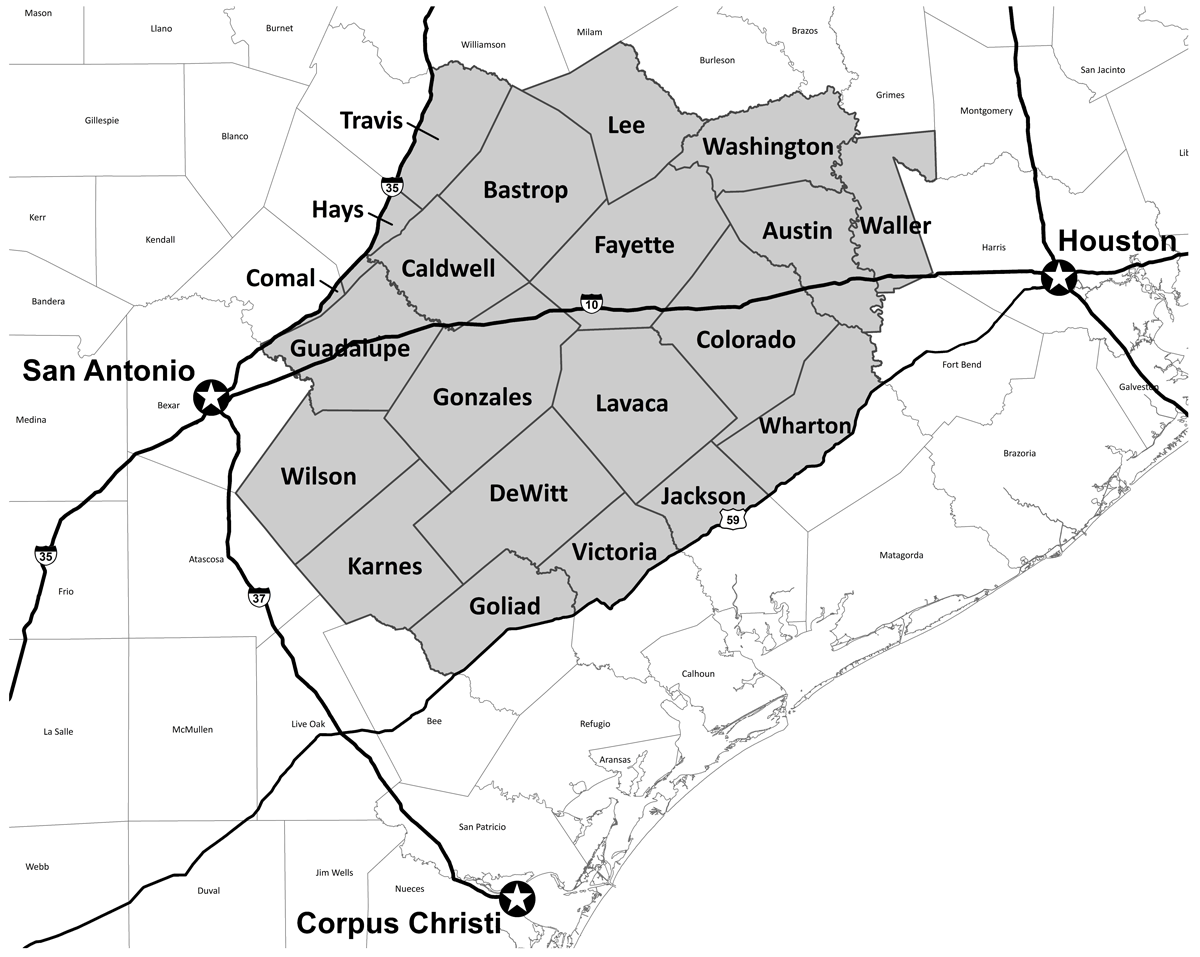
Mandatory Antlerless Harvest Reporting
Counties
Harvest Reporting
Counties map
- Austin County
- Bastrop County
- Caldwell County
- Colorado County
- Comal County (E of I-35)
- DeWitt County
- Fayette County
- Goliad County (N of US 59)
- Gonzales County
- Guadalupe County
- Hays County (E of I-35)
- Jackson County (N of US 59)
- Karnes County
- Lavaca County
- Lee County
- Travis County (E of I-35)
- Victoria County (N of US 59)
- Waller County
- Washington County
- Wharton County (N of US 59)
- Wilson County
Publications
Deer Research Genetics and Antler Development
- Genetics in Antler Development
- Managing for Age in White-tailed Deer
- Role of Nutrition in Antler Development
- Stages of Antler Development
- Are White-tailed Deer Antler Characteristics Inherited? PDF
- Are White-tailed Deer Antler Characteristics Inherited?
- Genetic and Environmental Interaction in White-tailed Deer:
- Stress Study Results
- Increased Antler Mass and Body Weights
- Increased Production of Quality Yearlings
- Increased Antler Measurements
- Conclusions / Management Implications
- Effects of Genetics and Nutrition on Antler Development and Body Size of White-tailed Deer PDF
- Spikes Are Not Inferior, Or Are They?
- Understanding Spike Buck Harvest PDF
- Big Charlie Was No Ordinary Deer PDF
- Should I Buy a Brood Buck?
Deer Management
- White-tailed Deer Management in the Texas Hill Country PDF
- White-tailed Deer Management in the Rolling Plains of Texas PDF
- Guidelines for White-tailed Deer Management in the Cross Timbers and Prairies Region of North Texas PDF
- Deer Management in the South Texas Plains PDF
- Ecology and Deer Habitat Management PDF
- Managing Habitat for White-tailed Deer in the Hill Country PDF
- Basics of Brush Management for White-tailed Deer Production PDF
- Harvest: An Essential Strategy for White-tailed Deer Management PDF
- The Management of Spike Bucks in a White-tailed Deer Population PDF
- Developing a Deer Management Plan PDF
- Mule Deer Management in Texas PDF
Deer Biology and Ecology
Deer Survey Techniques
Deer Nutrition and Forages
- Common Browse Plants Used by White-Tailed Deer in the Cross Timbers and Prairies of Texas PDF
- Common Browse Plants Used by White-Tailed Deer in South-Central Texas PDF
- Common Woody Browse Plants Utilized by White-Tailed Deer in South Texas PDF
- White-tailed Deer Food Habits and Preferences in the Cross Timbers and Prairies Region of Texas PDF