Work Session
Wednesday, January 21, 2026
9:00 a.m. CST
Paul L. Foster, Commission Chair
David Yoskowitz, Ph.D., Executive Director
Texas Parks and Wildlife Department
Commission Hearing Room
4200 Smith School Road, Austin, TX 78744
Agenda
Approval of the Previous Minutes from the Commission Work Session held November 5, 2025
Approval of the Previous Minutes from the Commission Regional Public Hearing held November 5, 2025
- Update on the Texas Parks and Wildlife Department’s Progress in Implementing the Texas Parks and Wildlife Department Land and Water Resources Conservation and Recreation Plan – David Yoskowitz, Ph.D.
- Internal Affairs Update
- Staff Recognitions
- Land and Water Resources Conservation and Recreation Plan Update
- Financial Overview – Reggie Pegues
- Internal Audit Update – Brandy Meeks
- Designation of Nonprofit Partners – Recommended Adoption of Proposed Changes – James Murphy (Action Item No. 2)
- Nonprofit Partner Rules – Texas Parks and Wildlife Mutual Association – Recommended Adoption of the Proposed Changes – James Murphy (Action Item No. 3)
- Implementation of Legislation During the 89th Texas Legislative Session – House Bill 3088 – Relating to the Authority of the Texas Parks and Wildlife Department to Procure Goods and Services Related to Items for Resale by the Department – Recommended Approval of Procurement Methods – Craig Bonds (Action Item No. 4)
- Implementation of Legislation During the 89th Texas Legislative Session – Senate Bill 1245 – Relating to the Take of Aoudad Sheep by Using a Helicopter – Recommended Adoption of Proposed Changes – Kory Gann (Action Item No. 5)
- Chronic Wasting Disease Detection and Response Rules – Recommended Adoption of Proposed Changes – Kory Gann (Action Item No. 6)
- Implementation of Legislation During the 89th Texas Legislative Session – Senate Bill 2801 – Relating to a Permit Issued by the Parks and Wildlife Department for Certain Hunting Dog Field Trials; Authorizing a Fee – Recommended Adoption of Proposed Changes – Kevin Mote (Action Item No. 7)
- 2026-2027 Statewide Hunting and Migratory Game Bird Proclamation – Request Permission to Publish Proposed Changes in the Texas Register – Shaun Oldenburger, Blaise Korzekwa
- Party Boat Rules – Recommended Adoption of Proposed Changes – Cody Jones (Action Item No. 8)
- Harmful or Potentially Harmful Fish, Shellfish, and Aquatic Plants – Special Provisions for Dotted Duckweed and Introduction of Fish, Shellfish and Aquatic Plants – Update to Aquatic Plant Definition – Recommended Adoption of Proposed Changes – Michael Tennant, Zach Olsen (Action Item No. 9)
- Special Take Authorization for Disease Management – Request Permission to Publish Proposed Changes in the Texas Register – Kory Gann
- Disposition of Land – San Patricio County – Approximately 8.1 Acres at Lake Corpus Christi State Park – Trey Vick (Action Item No. 10)
- Exchange of Land – Bexar County – Approximately 3 Acres at Government Canyon State Natural Area – Trey Vick (Action Item No. 11)
- Land Acquisition – Edwards County – Approximately 1,200 Acres at Devil’s Sinkhole State Natural Area – Trey Vick (Work Session and Executive Session) (Action Item No. 12)
- Land Acquisition – Brazoria County – Approximately 2,500 Acres at the Justin Hurst Wildlife Management Area (Peach Point) – Stan David (Work Session and Executive Session) (Action Item No. 13)
- Land Acquisition – Marion County – Approximately 78 Acres at Caddo Lake Wildlife Management Area – Stan David (Work Session and Executive Session) (Action Item No. 14)
- Land Acquisition – Limestone County – Approximately 6 Acres at Fort Parker State Park – Jacob Aston (Work Session and Executive Session) (Action Item No. 15)
- Request for Utility Easement – Jefferson County – Approximately 2.4 Acres at the J.D. Murphree Wildlife Management Area – Whitney Gann, Ph.D. (Work Session and Executive Session) (Action Item No. 16)
- Request for Pipeline Easement – Jefferson County – Approximately 13 Acres at the J.D. Murphree Wildlife Management Area – Request Permission to Begin the Public Notice and Input Process – Whitney Gann, Ph.D. (Work Session and Executive Session)
- Land Acquisition – Stephens County – Approximately 2,850 Acres – Request Permission to Begin the Public Notice and Input Process – Trey Vick (Work Session and Executive Session)
- Land Acquisition – Parker County – Approximately 50 Acres at Lake Mineral Wells State Park and Trailway – Request Permission to Begin the Public Notice and Input Process – Trey Vick (Work Session and Executive Session)
- Centennial Parks Conservation Fund Projects – Rodney Franklin (Executive Session Only)
- Litigation Update – James Murphy (Executive Session Only)
Land and Water Plan
Financial
Natural Resources
Land Conservation
Executive Session
Agenda Items
Work Session Agenda Item 1
Presenter: David Yoskowitz, Ph.D.
Update on the Texas Parks and Wildlife Department’s Progress in Implementing the Texas Parks and Wildlife Department Land and Water Resources Conservation and Recreation Plan
I. Executive Summary: Executive Director David Yoskowitz, Ph.D. will briefly update the Texas Parks and Wildlife Commission (Commission) on the status of Texas Parks and Wildlife Department’s (TPWD) efforts to implement the Land and Water Resources Conservation and Recreation Plan (plan).
II. Discussion: In 2001, the 77th Texas Legislature directed that TPWD develop a Land and Water Resources Conservation and Recreation Plan (Texas Parks and Wildlife Code section 11.104). In 2002, the Commission adopted the first plan. A revised plan was adopted by the Commission in January 2005. In November 2009, the Commission approved a new plan, effective January 1, 2010, that included broad input from stakeholders and the general public. Minor revisions continue to be made to the plan. Every five years, TPWD is statutorily required to evaluate its progress toward achieving the plan’s goal and objectives. In November 2023, the Commission approved the 2024 Land and Water Resources Conservation and Recreation Plan goals, objectives, strategies, and actions, which are available on TPWD’s website. Dr. Yoskowitz will update the Commission on TPWD’s recent progress in achieving the plan’s goals, objectives, and deliverables.
The plan consists of the following four goals:
- Practice, Encourage, and Enable Science-Based Stewardship of Natural and Cultural Resources
- Increase Access to and Participation in the Outdoors
- Educate, Inform, and Engage Texas Citizens in Support of Conservation and Recreation
- Employ Efficient, Sustainable, and Sound Business Practices
Work Session Agenda Item 2
Presenter: Reggie Pegues
Financial Overview
I. Executive Summary: Staff will present a financial overview of the Texas Parks and Wildlife Department (TPWD).
II. Discussion: Staff will update the Texas Parks and Wildlife Commission on state park, boat registration and titling, and license fee revenues collected by TPWD for Fiscal Year (FY) 2025 and for year-to-date FY 2026. Staff will also summarize recent budget adjustments for FY 2026.
Work Session Agenda Item 3
Presenter: Brandy Meeks
Internal Audit Update
I. Executive Summary: Staff will update the Texas Parks and Wildlife Commission (Commission) on Internal Audit activities and projects that have taken place since the last Commission Meeting.
II. Discussion: Staff will present an update on the Texas Parks and Wildlife Department Fiscal Years (FY) 2025 and FY 2026 Internal Audit Plans, as well as an update on external audits and assessments.
Work Session Agenda Item 10
Presenters: Shaun Oldenburger
Blaise Korzekwa
2026-2027 Statewide Hunting and Migratory Game Bird Proclamation – Request Permission to Publish Proposed Changes in the Texas Register
I. Executive Summary: Staff seeks permission to publish proposed amendments to the Statewide Hunting Proclamation and the Migratory Game Bird Proclamation in the Texas Register for public comment. The proposed amendments would amend regulations related to game birds and big game.
II. Discussion: Responsibility for establishing seasons, bag limits, and means and methods for taking wildlife resources is delegated to the Texas Parks and Wildlife Commission under Texas Parks and Wildlife Code chapter 61 (Uniform Wildlife Regulatory Act). The potential changes are based upon statutory requirements and Commission policy, including scientific investigation and required findings of fact where applicable. The potential changes are intended to increase recreational opportunity, decrease regulatory complexity where possible, promote enforcement, and provide for the sound biological management of the wildlife resources of the state. The proposed amendments would generally do the following:
Game Bird Regulations
- Align chachalaca and quail hunting season dates.
- Close Matagorda and Wharton counties to wild turkey hunting.
- Change annual bag limits to only gobblers and bearded hens in counties where either sex is currently allowed for wild turkey hunting.
- Open Angelina National Forest (Jasper County) in the East Zone to wild turkey hunting.
- Change the South Zone dove hunting season structure, which may include an earlier regular season opening date and removal of the Special White-winged Dove Days.
- Reflect calendar progression with most migratory game bird hunting season dates.
Big Game Regulations
- Expand doe days in 21 counties in the Post Oak Savannah ecoregion.
- Modify the definition of “muzzleloader.”
Attachments – 2
Work Session Agenda Item 10
Exhibit A
2026-2027 STATEWIDE HUNTING PROCLAMTION
PROPOSAL PREAMBLE
1. Introduction.
The Texas Parks and Wildlife Department proposes amendments to 31 TAC §§65.3, 65.42, 65.64, and 65.66, concerning the Statewide Hunting Proclamation.
The proposed amendment to §65.3, concerning Definitions, would modify the definition of “muzzleloader” with respect to references on how the firearm is loaded. The proposed change would clarify that the term “muzzleloader” applies to any firearm designed such that the bullet or projectile can be loaded only through the muzzle. Modern muzzleloading technology features various design changes that have caused confusion regarding use of this new technology and its legality under the current definition of muzzleloader. The proposed amendment is intended to eliminate ambiguity and expand hunting opportunities during muzzleloader season.
The proposed amendment to §65.42, concerning Deer, would increase the number of “doe days” in 21 counties located in the Post Oak Savannah ecoregion. The department manages deer populations by the deer management unit (DMU) concept, which organizes the state into specific areas that share similar soil types, vegetative communities, land-use practices, and deer population characteristics. In this way, deer seasons, bag limits, and special provisions can be more effectively analyzed to monitor the efficacy of management strategies on deer populations within each DMU. In some DMUs characterized by fragmented habitat, high hunting pressure, and large numbers of small acreage properties, the department protects the reproductive potential of the population by restricting the time during which antlerless deer may be taken with a firearm, known colloquially as “doe days.” The department has determined that a 16-plus doe-day structure that begins the second Saturday of November and closes the Sunday following Thanksgiving Day can be implemented in 21 counties that currently have four doe days. Department population and harvest data indicate that deer densities are increasing within the affected DMUs and that antlerless harvest is less than half of the total harvest, which is resulting in a skewed sex ratio that is undesirable. The proposed amendment is intended to provide additional hunting opportunities within the tenets of sound biological management, and address resource concerns such as increasing deer densities and habitat degradation.
The proposed amendments to §65.64, concerning Turkey, would prohibit the harvest of unbearded hens statewide. The department has observed significant declines in turkey populations over the past 10 years in Texas, as indicated by United States Geodetic Survey (USGS) Breeding Bird Survey results. Recent research suggests that hen abundance during the nesting season is the most impactful variable to long-term sustainability. The department believes the proposed change would reduce overall hen harvest in the state and, potentially, improve recruitment. The proposed amendment to §65.64 also would close turkey seasons in Matagorda and Warton counties. Mandatory harvest reporting has been in place in these counties since 2022. In the past three years, no turkey harvest has been reported in Matagorda County, and only one — a banded bird released under a Trap, Transport, and Transplant (TTT) permit—has been reported in Wharton County. Additionally, turkey distribution surveys indicate that Matagorda County has no or minimal turkey populations, and the data for Wharton County indicates turkeys present in one area near a previous TTT release site. With the proposed closures, the department will explore opportunities to restock turkeys in these areas, focusing on private lands where landowners are interested and suitable habitat exists.
Lastly, the proposed amendment to §65.64 would reopen a spring turkey season in a portion of Angelina National Forest in Jasper County. In 2015, the commission closed Angelina National Forest in Jasper County to support turkey restocking efforts and research. One of the department’s decision variables is a minimum of five-years post stocking period before that area is considered for reopening a turkey season. The portion of the Angelina National Forest in Jasper County has met that threshold (the last stocking occurred in 2017). This portion of Jasper County is the only part of the county where the spring turkey season is closed, and the proposed change would create a county-wide season.
The proposed amendment to §65.66, concerning Chachalaca, would open the chachalaca hunting season on the first day in November and close it on the last day in February. The proposed amendment would make chachalaca season concurrent with quail season, which is intended to maintain consistency and simplify hunting regulations across the state. The department has determined that the proposed change would have no biological impact on chachalaca populations.
2. Fiscal Note.
Shaun Oldenburger, Wildlife Division Small Game Program Director, has determined that for each of the first five years that the rules as proposed are in effect, there will be no fiscal implications to state or local governments as a result of administering or enforcing the rules.
3. Public Benefit/Cost Note.
Mr. Oldenburger also has determined that for each of the first five years that the rules as proposed are in effect:
(a) The public benefit anticipated as a result of enforcing or administering the proposed rules will be the dispensation of the agency’s statutory duty to protect and conserve the resources of this state, the duty to equitably distribute opportunity for the enjoyment of those resources among the citizens, and the execution of the commission’s policy to maximize recreational opportunity within the precepts of sound biological management practices.
There will be no adverse economic effect on persons required to comply with the rules as proposed.
(B) Under the provisions of Government Code, Chapter 2006, a state agency must prepare an economic impact statement and a regulatory flexibility analysis for a rule that may have an adverse economic effect on small businesses, micro-businesses, or rural communities. As required by Government Code, §2006.002(g), the Office of the Attorney General has prepared guidelines to assist state agencies in determining a proposed rule’s potential adverse economic impact on small and microbusinesses and rural communities. Those guidelines state that an agency need only consider a proposed rule’s direct adverse economic impacts to determine if any further analysis is required. The department considers "direct economic impact" to mean a requirement that would directly impose recordkeeping or reporting requirements; impose taxes or fees; result in lost sales or profits; adversely affect market competition; or require the purchase or modification of equipment or services.
(C) The department has determined that the proposed rules regulate various aspects of recreational license privileges that allow individual persons to pursue and harvest wildlife resources in this state and therefore do not directly affect small businesses, micro-businesses, or rural communities. Therefore, neither the economic impact statement nor the regulatory flexibility analysis described in Government Code, Chapter 2006, is required.
(D) The department has not drafted a local employment impact statement under the Administrative Procedures Act, §2001.022, as the agency has determined that the rules as proposed will not impact local economies.
(E) The department has determined that Government Code, §2001.0225 (Regulatory Analysis of Major Environmental Rules), does not apply to the proposed rules.
The department has determined that there will not be a taking of private real property, as defined by Government Code, Chapter 2007, as a result of the proposed rules.
(F) In compliance with the requirements of Government Code, §2001.0221, the department has prepared the following Government Growth Impact Statement (GGIS). The ruled as proposed, if adopted, will:
(1) neither create nor eliminate a government program;
(2) not result in an increase or decrease in the number of full-time equivalent employee needs;
(3) not result in a need for additional General Revenue funding;
(4) not affect the amount of any fee; not create a new regulation;
(5) limit an existing regulation (by closing turkey seasons in two counties and prohibiting the harvest of unbearded hens), expand an existing regulation (by adding doe days in 21 counties and restoring turkey season countywide in one county);
(6) neither increase nor decrease the number of individuals subject to regulation; and
(7) not positively or adversely affect the state’s economy.
4. Request for Public Comment.
Comments concerning the proposed rules affecting big game species may be submitted to Blaise Korzekwa at (512) 415-8459, e-mail: blaise.korzekwa@tpwd.texas.gov. Comments concerning the proposed rules affecting turkey or chachalaca may be submitted to Shaun Oldenburger at (512) 757-6067, email: shaun.oldenburger@tpwd.texas.gov. Comments also may be submitted via the department’s website at https://tpwd.texas.gov/business/feedback/public_comment/.
5. Statutory Authority.
The amendment is proposed under the authority of Parks and Wildlife Code, Chapter 61, which requires the commission to regulate the periods of time when it is lawful to hunt, take, or possess game animals, game birds, or aquatic animal life in this state; the means, methods, and places in which it is lawful to hunt, take, or possess game animals, game birds, or aquatic animal life in this state; the species, quantity, age or size, and, to the extent possible, the sex of the game animals, game birds, or aquatic animal life authorized to be hunted, taken, or possessed; and the region, county, area, body of water, or portion of a county where game animals, game birds, or aquatic animal life may be hunted, taken, or possessed.
The proposed amendment affects Parks and Wildlife Code, Chapter 61.
6. Rule Text.
§65.3. Definitions. The following words and terms, when used in this chapter, shall have the following meanings, unless the context clearly indicates otherwise. All other words and terms in this chapter shall have the meanings assigned in the Texas Parks and Wildlife Code.
(1) – (24) (No change.)
(25) Muzzleloader — Any firearm designed such that the [propellant and] bullet or projectile can be loaded only through the muzzle.
(26) – (36) (No change.)
§65.42. Deer.
(a) (No change.)
(b) White-tailed deer. The open seasons and bag limits for white-tailed deer shall be as follows.
(1) (No change.)
(2) North Zone. The general open season for the counties listed in this paragraph is from the first Saturday in November through the first Sunday in January.
(A) – (F) (No change.)
(G) In Austin, Bastrop, Caldwell, Colorado, Comal (east of IH 35), DeWitt, Fayette, Goliad (north of U.S. Highway 59), Gonzales, Guadalupe, Hays (east of IH 35), Jackson (north of U.S. Highway 59), Karnes, Lavaca, Lee, Travis (east of IH 35), Victoria (north of U.S. Highway 59), Waller, Washington, Wharton (north of U.S. Highway 59), and Wilson counties:
(i) – (ii) (No change.)
(iii) antlerless deer may be taken from the second Saturday of November[Thanksgiving Day] through the Sunday immediately following Thanksgiving Day.
(iv) (No change.)
(H) – (K) (No change.)
(3) – (6) (No change.)
(7) Special Youth-Only Seasons. There shall be special youth-only general hunting seasons in all counties where there is a general open season for white-tailed deer.
(A) – (C) (No change.)
(D) Provisions for the take of antlerless deer in the individual counties listed in paragraph (2)(G) of this subsection shall be as specified in those counties for the period of time from the second Saturday of November[Thanksgiving Day] through the Sunday immediately following Thanksgiving Day.
(E) – (G) (No change.)
(c) (No change.)
§65.64. Turkey.
(a) (No change.)
(b) The open seasons and bag limits for turkey shall be as follows.
(1) Fall seasons and bag limits:
(A) (No change.)
(B) In Brooks, Kenedy, Kleberg, and Willacy counties, there is a fall general open season.
(i) (No change.)
(ii) Bag limit: four turkeys, gobblers or bearded hens[either sex].
(C) The counties and portions of counties listed in this subparagraph are in the Fall North Zone. In Archer, Armstrong, Bandera, Baylor, Bell (west of Interstate Highway 35), Bexar, Blanco, Borden, Bosque, Briscoe, Brown, Burnet, Callahan, Carson, Childress, Clay, Coke, Coleman, Collingsworth, Comal (west of Interstate Highway 35), Comanche, Concho, Cooke, Coryell, Cottle, Crane, Crockett, Crosby, Dawson, Denton, Dickens, Donley, Eastland, Ector, Edwards, Erath, Fisher, Floyd, Foard, Garza, Gillespie, Glasscock, Gray, Hall, Hamilton, Hardeman, Hartley, Haskell, Hays (west of Interstate Highway 35), Hemphill, Hill (west of Interstate Highway 35 East), Hood, Howard, Hutchinson, Irion, Jack, Johnson, Jones, Kendall, Kent, Kerr, Kimble, King, Kinney (north of U.S. Highway 90), Knox, Lampasas, Lipscomb, Llano, Lubbock, Lynn, Martin, Mason, McCulloch, McLennan (west of Interstate Highway 35), Medina (north of U.S. Highway 90), Menard, Midland, Mills, Mitchell, Montague, Moore, Motley, Nolan, Ochiltree, Oldham, Palo Pinto, Parker, Potter, Randall, Reagan, Real, Roberts, Runnels, San Saba, Schleicher, Scurry, Shackelford, Somervell, Stephens, Sterling, Stonewall, Sutton, Swisher, Tarrant, Taylor, Throckmorton, Tom Green, Travis (west of Interstate Highway 35), Upton, Uvalde (north of U.S. Highway 90), Val Verde (north of a line beginning at the International Bridge and proceeding along Spur 239 to U.S. Hwy. 90 and thence to the Kinney County line), Ward, Wheeler, Wichita, Wilbarger, Williamson (west of Interstate Highway 35), Wise, and Young counties, there is a fall general open season.
(i) (No change.)
(ii) Bag limit: four turkeys, gobblers or bearded hens[either sex].
(2) (No change.)
(3) Spring season and bag limits.
(A) – (B) (No change.)
(C) In Bastrop, Brewster, Caldwell, Colorado, Comal (east of Interstate Highway 35), Fayette, Guadalupe (north of I-10), Hays (east of Interstate Highway 35), Hill (east of Interstate Highway 35 East), Jackson, Jeff Davis, Lavaca, Lee, [Matagorda,] McLennan (east of Interstate Highway 35), Pecos, Terrell, and Travis (east of Interstate Highway 35) [and Wharton] counties, there is a spring general open season.
(i) – (ii) (No change.)
(D) The counties and portions of counties listed in this subparagraph are in the East Zone. In Bowie (north of U.S. 82), Cass, Fannin (north of U.S. 82), Grayson, Jasper [(other than the Angelina National Forest)], Lamar (north of U.S. 82), Marion, Nacogdoches, Newton, Polk, Red River (north of U.S. 82), and Sabine counties, there is a spring general open season.
(i) – (iii) (No change.)
(4) (No change.)
(c) — (d) (No change.)
§65.66. Chachalaca. In Cameron, Hidalgo, Starr, and Willacy counties, there is an open season for chachalacas.
(1) Open season: The first day in November[Saturday nearest October 28] through the last day[Sunday] in February.
(2) – (3) (No change.)
This agency hereby certifies that the proposal has been reviewed by legal counsel and found to be within the agency’s authority to adopt.
Issued in Austin, Texas, on
Work Session Agenda Item 10
Exhibit B
2026 — 2027 MIGRATORY GAME BIRD PROCLAMATION
PROPOSAL PREAMBLE
1. Introduction.
The Texas Parks and Wildlife Department (the department) proposes amendments to 31 TAC §§65.314 — 65.320, concerning the Migratory Game Bird Proclamation.
The United States Fish and Wildlife Service (Service) issues annual frameworks for the hunting of migratory game birds in the United States. Regulations adopted by individual states may be more restrictive than the federal frameworks but may not be less restrictive. Responsibility for establishing seasons, bag limits, means, methods, and devices for harvesting migratory game birds within Service frameworks is delegated to the Texas Parks and Wildlife Commission (Commission) under Parks and Wildlife Code, Chapter 64, Subchapter C.
With exceptions as noted, the proposed amendments specify the season dates for hunting the various species of migratory game birds for 2026-2027 seasons, along with minor formatting changes to improve the efficiency and clarity of the regulations. The proposed rules (except as noted in the discussion of the proposed elimination of the Special White-winged Dove Area (SWWDA) season and expanded season dates for the South Zone) retain the season structure and bag limits for all species of migratory game birds from last year while adjusting the season dates to allow for calendar shift (i.e., to ensure that seasons open on the desired day of the week), since dates from a previous year do not fall on the same days in following years.
The proposed amendment to §65.314, concerning Doves (Mourning, White-Winged, White-Tipped, White-Fronted Doves), would eliminate the special White-winged Dove Days and the SWWDA distinction from the South Zone and would open the regular season of the South Zone on September 1. Under the federal frameworks, Texas is allowed 90 total days of dove hunting opportunity in the South Zone. Historically under the frameworks, the earliest possible date for full-day dove hunting in the South Dove Zone was September 14; however, Texas was also authorized to have up to six half-days of hunting opportunity between September 1 and September 19. The department reexamined the available biological information on mourning doves, including population abundance, hatch dates, harvest rates, and current harvest strategies. Based on this reexamination, the department proposed to the Service to allow the regular dove hunting season to begin on September 1st and eliminate federal restrictions on opening season dates in the frameworks for this hunting season since no biological impact is expected to occur, based on the best available information. The Service has approved these changes to the federal frameworks. As a result, the proposed change would eliminate the special white-winged dove provisions and allow for an earlier season in the South Zone.
The proposed amendment to §65.316, concerning Geese, alters section (b)(2)(B) to combine the season dates and bag limits for Dark Geese in the Eastern Zone into one subsection to maintain consistency within the section.
The proposed amendment to §65.317, concerning Special Youth, Active-Duty Military, and Military Veteran Seasons, alters subsection (b) to separate the seasons for moorhens and gallinules from waterfowl seasons to preserve parallelism.
2. Fiscal Note.
Shaun Oldenburger, Wildlife Division Small Game Program Director, has determined that for the first five years that the amendments as proposed are in effect, there will be no additional fiscal implications to state or local governments of enforcing or administering the rules as proposed.
3. Public Benefit/Cost Note.
Mr. Oldenburger also has determined that for each of the first five years the proposed rules are in effect:
(A) The public benefit anticipated as a result of enforcing the rules as proposed will be the department’s discharge of its statutory obligation to manage and conserve the state’s populations of migratory game birds for the use and enjoyment of the public, consistent with the principles of sound biological management.
(B) Under the provisions of Government Code, Chapter 2006, a state agency must prepare an economic impact statement and a regulatory flexibility analysis for a rule that may have an adverse economic effect on small businesses, micro-businesses, or rural communities. As required by Government Code, §2006.002(g), the Office of the Attorney General has prepared guidelines to assist state agencies in determining a proposed rule’s potential adverse economic impact on small and microbusinesses and rural communities. Those guidelines state that an agency need only consider a proposed rule’s "direct adverse economic impacts" to determine if any further analysis is required. The department considers "direct economic impact" to mean a requirement that would directly impose recordkeeping or reporting requirements; impose taxes or fees; result in lost sales or profits; adversely affect market competition; or require the purchase or modification of equipment or services.
The department has determined that the proposed rules regulate various aspects of recreational license privileges that allow individual persons to pursue and harvest migratory game bird resources in this state and therefore do not directly affect small businesses, micro-businesses, or rural communities. Therefore, neither the economic impact statement nor the regulatory flexibility analysis described in Government Code, Chapter 2006, is required.
There also will be no adverse economic effect on persons required to comply with the rules as proposed.
(C) The department has not drafted a local employment impact statement under the Administrative Procedures Act, §2001.022, as the agency has determined that the rules as proposed will not impact local economies.
(D) The department has determined that Government Code, §2001.0225 (Regulatory Analysis of Major Environmental Rules), does not apply to the proposed rules.
(E) The department has determined that there will not be a taking of private real property, as defined by Government Code, Chapter 2007, as a result of the proposed rules.
(F) In compliance with the requirements of Government Code, §2001.0221, the department has prepared the following Government Growth Impact Statement (GGIS). The rules as proposed, if adopted, will:
(1) neither create nor eliminate a government program;
(2) not result in an increase or decrease in the number of full-time equivalent employee needs;
(3) not result in a need for additional General Revenue funding;
(4) not affect the amount of any fee;
(5) not create or limit an existing regulation, but will expand an existing regulation (by consolidating dove harvest regulations in the South Zone);
(6) neither increase nor decrease the number of individuals subject to regulation; and not positively or adversely affect the state’s economy.
4. Request for Public Comment.
Comments on the proposed rules may be submitted to Shaun Oldenburger (Small Game Program Director) at (512) 389-4778, email: shaun.oldenburger@tpwd.texas.gov or via the department website at www.tpwd.texas.gov.
5. Statutory Authority.
The amendments are proposed under Parks and Wildlife Code, Chapter 64, which authorizes the Commission and the Executive Director to provide the open season and means, methods, and devices for the hunting and possessing of migratory game birds.
The proposed amendments affect Parks and Wildlife Code, Chapter 64.
6. Rule Text.
§65.314. Doves (Mourning, White-Winged, White-Tipped, White-Fronted Doves).
(a) Zones.
(1) – (2) (No change.)
(3) South Zone[and Special White-winged Dove Area]: That portion of the state south of a line beginning at the International Toll Bridge in Del Rio; thence northeast along U.S. Highway 277 Spur to U.S. Highway 90 in Del Rio; thence east along U.S. Highway 90 to State Loop 1604; thence following Loop 1604 south and east to Interstate Highway 10; thence east along Interstate Highway 10 to the Texas-Louisiana State Line.
(b) Seasons[; Daily Bag Limits].
(1) North Zone:[.] September 1- November 8, 2026 and December 18, 2026- January 7, 2027.
[(A) Dates: September 1- November 9, 2025 and December 19, 2025 — January 7, 2026.]
[(B) Daily bag limit: 15 mourning doves, white-winged doves, and white-tipped (white-fronted) doves in the aggregate, including no more than two white-tipped doves per day.]
(2) Central Zone:[.] September 1 — October 25, 2026 and December 11, 2026 — January 14, 2027.
[(A) Dates: September 1 — October 26, 2025and December 12, 2025- January 14, 2026.]
[(B) Daily bag limit: 15 mourning doves, white-winged doves, and white-tipped (white-fronted) doves in the aggregate, including no more than two white-tipped doves per day.]
(3) South Zone:[and Special White-winged Dove Area] September 1 — October 25, 2026 and December 18, 2026 — January 21, 2027.
[(A) Special White-winged Dove Area Season.]
[(i) Dates: September 5-7, 12-13, 2025.]
[(ii) Daily bag limit: 15 white-winged doves, mourning doves, and white-tipped (white-fronted) doves, in the aggregate to include no more than two mourning doves and two white-tipped (white-fronted) doves per day.]
[(B) South Zone Season.]
[(i) Dates: September 14 — October 26, 2025 and December 12, 2025 — January 22, 2026.]
[(ii) Daily bag limit: 15 mourning doves, white-winged doves, and white-tipped (white-fronted) doves in the aggregate, including no more than two white-tipped (white-fronted) doves per day.]
(c) Daily bag limit for all zones: 15 mourning doves, white-winged doves, and white-tipped (white-fronted) doves in the aggregate, including no more than two white-tipped (white-fronted) doves per day.
§65.315. Ducks, Coots, Mergansers, and Teal.
(a) (No change.)
(b) Season dates and bag limits.
(1) HPMMU.
(A) For all species other than "dusky ducks": October 24-25 and October 30, 2026 – January 31, 2027 [18-19 and October 24, 2025 – January 25, 2026]; and
(B) "dusky ducks": October 31, 2026 – January 31, 2027[27, 2025 — January 25, 2026].
(2) North Zone.
(A) For all species other than "dusky ducks": November 14-29, 2026 and December 5, 2026 – January 31, 2027[8-30, 2025 and December 6, 2025 — January 25, 2026]; and
(B) "dusky ducks": November 19-29, 2026 and December 5, 2026 — January 31, 2027 [13-30, 2025 and December 6 – January 25, 2026].
(3) South Zone.
(A) For all species other than "dusky ducks": November 7-29, 2026 and December 12, 2026 – January 31[1-30, 2025 and December 13, 2025 — January 25, 2026]; and
(B) "dusky ducks": November 12-29, 2026 and December 12, 2026 – January 31, 2027[6-30, 2025 and December 13, 2025 — January 25, 2026].
(4) September teal-only season.
(A) During the September teal-only special season, the season is closed for all species of ducks other than teal ducks (blue-winged, green-winged, and cinnamon).
(B) Dates: September 19-27, 2026[20-28, 2025].
(c) (No change.)
§65.316. Geese.
(a) (No change.)
(b) Season dates and bag limits.
(1) Western Zone.
(A) Light geese: November 7, 2026 – February 7, 2027[1, 2025 — February 1, 2026]. The daily bag limit for light geese is five.
(B) Dark geese: November 7, 2026 — February 7, 2027[1, 2025 — February 1, 2026]. The daily bag limit for dark geese is five.
(2) Eastern Zone.
(A) Light geese: November 7, 2026 — February 19, 2027[1, 2025 — February 15, 2026]. The daily bag limit for light geese is five.
(B) Dark geese: November 7, 2026- January 31, 2027. The daily bag limit for dark geese is five, to include no more than two white-fronted geese.
[(i) Season: November 1, 2025- January 25, 2026;]
[(ii) Bag limit: The daily bag limit for dark geese is five, to include no more than two white-fronted geese.]
(c) September Canada goose season. Canada geese may be hunted in the Eastern Zone during the season established by this subsection. The season is closed for all other species of geese during the season established by this subsection.
(1) Season dates: September 12-27, 2026[13-28, 2025].
§65.317. Special Youth, Active-Duty Military, and Military Veteran Seasons
(a) Special Youth Waterfowl Season. There shall be a Special Youth Season for waterfowl, during which the hunting, taking, and possession of geese, ducks, mergansers, and coots is restricted to licensed hunters 16 years of age and younger accompanied by a person 18 years of age or older, except for persons hunting by means of falconry under the provisions of §65.320 of this title (relating to Extended Falconry Seasons).
(1) HPMMU:
(A) season dates: October 17-18, 2026[11-12, 2025];
(B) (No change.)
(2) North Duck Zone:
(A) season dates: November 7-8, 2026[1-2, 2025];
(B) (No change.)
(3) South Duck Zone:
(A) season dates: October 31 — November 1, 2026[25-26, 2025];
(B) (No change.)
(b) Special Active-Duty Military and Military Veteran Migratory Game Bird Season.
(1) – (2) (No change.)
(3) Season Dates and Bag Limits.
(A) HPMMU:
(i) season dates: October 17-18, 2026[11-12, 2025];
(ii) (No change.)
(B) North Duck Zone:
(i) season dates: November 7-8, 2026[1-2, 2025];
(ii) daily bag limits:
(I) (No change.)
(II) geese:
(-a-) – (-b-) (No change.)
(III)[(-c-)] moorhens and gallinules — as specified by §65.319(a)(2) of this title.
(C) South Duck Zone:
(i) season dates: October 31 — November 1, 2026[25-26, 2025];
(ii) daily bag limits:
(I) (No change.)
(II) geese:
(-a-) – (-b-) (No change.)
(III)[(-c-)] moorhens and gallinules — as specified by §65.319(a)(2) of this title.
(4) (No change.)
(2) (No change.)
§65.318. Sandhill Crane.
(a) (No change.)
(b) Season dates and bag limits.
(1) Zone A: October 31, 2026 – January 31, 2027[25, 2025 — January 25, 2026]. The daily bag limit is three.
(2) Zone B: November 27, 2026 – January 31, 2027[21, 2025 — January 25, 2026]. The daily bag limit is three.
(3) Zone C: December 12, 2026 – January 17, 2027[13, 2025 — January 18, 2026]. The daily bag limit is two.
(c) (No change.)
§65.319. Gallinules, Rails, Snipe, Woodcock.
(a) Gallinules (moorhen or common gallinule and purple gallinule) may be taken in any county of this state during the season established in this subsection.
(1) Season dates: September 19-27 and November 7, 2026 – January 6, 2027[20-28 and November 1 — December 31, 2025].
(2) (No change.)
(b) Rails may be taken in any county of this state during the season established by this subsection.
(1) Season dates: September 19-27 and November 7, 2026 – January 6, 2027[20-28 and November 1 — December 31, 2025].
(2) (No change.)
(c) Snipe may be taken in any county of this state during the season established by this subsection.
(1) Season dates: November 7, 2026 – February 21, 2027[1, 2025 — February 15, 2026].
(2) (No change.)
(d) Woodcock may be taken in any county of this state during the season established by this subsection.
(1) Season dates: December 18, 2026[2025] — January 31, 2027[2026].
(2) (No change.)
§65.320. Extended Falconry Seasons. It is lawful to take the species of migratory birds listed in this section by means of falconry during the seasons established by this section.
(1) Mourning doves, white-winged doves and white-tipped doves: November 13-29, 2026[14- November 30, 2025].
(2) Duck, gallinule, moorhen, rail, and woodcock: February 1-21, 2027[January 26 — February 15, 2025]1-21, 2027.
(3) – (4) (No change.)
This agency hereby certifies that the proposal has been reviewed by legal counsel and found to be within the agency’s authority to adopt.
Issued in Austin, Texas, on
Work Session Agenda Item 13
Presenter: Kory Gann
Special Take Authorization for Disease Management – Request Permission to Publish Proposed Changes in the Texas Register
I. Executive Summary: Staff seeks permission to publish proposed amendments to rules relating to the special take authorization for the take of wildlife in the Texas Register for public comment. The proposed amendments are intended to expand the scope of the authorization for take beyond deer and Chronic Wasting Disease (CWD)-related situations to incorporate additional wildlife health and disease-related reasons for take.
II. Discussion: Texas Parks and Wildlife Code section 12.013 authorizes the Texas Parks and Wildlife Commission to adopt rules governing the take of wildlife by a person acting under the supervision of a Texas Parks and Wildlife Department (TPWD) employee in a program or event conducted for the diagnosis, management, or prevention of a disease in wildlife. Current rules allow for the issuance of a special authorization for the take of white-tailed and/or mule deer when necessary to assist in TPWD efforts to combat CWD.
Since the adoption of these rules, there has been a need to broaden the scope of the authorization for take to include additional wildlife health and disease-related issues. This is increasingly evident given the potential reinvasion of the New World Screwworm (NWS) into Texas, which would require a mechanism for landowners to lawfully take NWS-infested wildlife. The proposed amendments would provide necessary flexibility to address various disease-related issues where take of wildlife by the landowner is warranted. They would also stipulate that all provisions and conditions of take – such as the number and type of wildlife; methods and time of take; duration of authorization; reporting requirements; diagnostic sample collection; carcass disposition; and disease testing requirements – will be detailed in the authorization itself.
Attachment – 1
Work Session Agenda Item 13
Exhibit A
SPECIAL TAKE AUTHORIZATION RULES
PROPOSAL PREAMBLE
1. Introduction.
The Texas Parks and Wildlife Department proposes an amendment to 31 TAC §65.907, concerning Special Take Authorization – Wildlife.
The proposed changes are intended to broaden the scope of the authorization for take beyond deer and CWD and to encompass other wildlife health/disease related reasons for take such as New World screwworm (which prompted the need for the proposal). Proposed changes would allow necessary flexibility to address different disease related issues where take by a landowner is necessary. Provisions and conditions of take, including number, type of animals, method of take, time of take, duration of authorization, reporting, sample collection, carcass disposition, and disease testing requirements, etc. would be addressed in the authorization itself.
2. Fiscal Note.
Kory Gann, Big Game Program Director, has determined that for each of the first five years that the rule as proposed is in effect, there will be no fiscal implications to state or local governments as a result of administering or enforcing the rule.
3. Public Benefit/Cost Note.
Mr. Gann also has determined that for each of the first five years that the rule as proposed is in effect:
(A) The public benefit anticipated as a result of enforcing or administering the proposed rule will be mitigating the spread of disease impacting native wildlife species such as Chronic Wasting Disease (CWD), New World Screwworm (NWS), or Highly Pathogenic Avian Influenza (HPAI).
There will be no adverse economic effects on persons required to comply with the rule.
(B) Under the provisions of Government Code, Chapter 2006, a state agency must prepare an economic impact statement and a regulatory flexibility analysis for a rule that may have an adverse economic effect on small businesses, micro-businesses, or rural communities. As required by Government Code, §2006.002(g), the Office of the Attorney General has prepared guidelines to assist state agencies in determining a proposed rule’s potential adverse economic impact on small and microbusinesses and rural communities. Those guidelines state that an agency need only consider a proposed rule’s direct adverse economic impacts to determine if any further analysis is required. The department considers “direct economic impact“ to mean a requirement that would directly impose recordkeeping or reporting requirements; impose taxes or fees; result in lost sales or profits; adversely affect market competition; or require the purchase or modification of equipment or services.
The department has determined that the proposed rule would result in no direct economic effect on any small businesses, micro-businesses, or rural community; therefore, neither the economic impact statement nor the regulatory flexibility analysis described in Government Code, Chapter 2006, is required.
(C) The department has not drafted a local employment impact statement under the Administrative Procedures Act, §2001.022, as the agency has determined that the rule as proposed will not impact local economies.
(D) The department has determined that Government Code, §2001.0225 (Regulatory Analysis of Major Environmental Rules), does not apply to the proposed rule.
(E) The department has determined that there will not be a taking of private real property, as defined by Government Code, Chapter 2007, as a result of the proposed rule.
(F) In compliance with the requirements of Government Code, §2001.0221, the department has prepared the following Government Growth Impact Statement (GGIS). The rule as proposed, if adopted, will:
(1) neither create nor eliminate a government program;
(2) not result in an increase or decrease in the number of full-time equivalent employee needs;
(3) not result in a need for additional General Revenue funding;
(4) not affect the amount of an existing fee;
(5) not create or repeal an existing regulation, but will expand an existing regulation (by increasing the applicability of the current rule to include all species of wildlife resources);
(6) not increase or decrease the number of individuals subject to regulation; and
(7) not positively or adversely affect the state’s economy.
4. Request for Public Comment.
Comments on the proposed rule may be submitted to Kory Gann, Big Game Program Director, email: kory.gann@tpwd.texas.gov. Comments also may be submitted via the department’s website at http://www.tpwd.texas.gov/business/feedback/public_comment/.
5. Statutory Authority.
The rule is proposed under Parks and Wildlife Code, §12.013, which authorizes the commission to adopt rules governing the take of wildlife under the supervision of a department employee in a program or event designated by the director as being conducted for the diagnosis, management, or prevention of a disease in wildlife.
The proposed amendment affects Parks and Wildlife Code, Chapter 12.
6. Rule Text.
§65.907. Special Take Authorization – Wildlife [White-tailed and Mule Deer].
(a) The department may issue a special take authorization for the take of wildlife[white-tailed or mule deer (hereinafter, "deer")] for purposes of assisting the department in conducting wildlife disease diagnosis, management, or prevention (hereinafter, "special take authorization"), as provided in this subsection. A person may request a special take authorization by completing and submitting a request [application] on a form supplied or approved by the department for that purpose.
(1) The department will not consider an incomplete request[application]for a special take authorization.
(2) The department may, at its discretion, conduct an inspection[a site inspection as a condition of issuance of a special take authorization].
(3) A special take authorization shall be issued only to a named individual and not in the name of any corporation, business, association, or group.
(b) A special take authorization is not valid until:
(1) the applicant has acknowledged, in writing via email to the department employee identified as the supervisory point of contact, that the applicant and all agents of the applicant have read and understand all:
(A) provisions of the special take authorization; and
(B) attendant obligations of the person to whom the special take authorization is issued and that person’s agents; and
(2) it has been approved in writing by the director of the department’s Wildlife Division or designee and the director of the department’s Law Enforcement Division or designee.
(c) A special take authorization shall specify the number and species of wildlife[type of deer] to be taken. No wildlife[deer] other than the number and species authorized[specified deer or number of deer authorized for take] shall be taken.
(d) The conditions and requirements for the take of wildlife shall be listed in the[take of deer under a] special take authorization. [shall be:]
[(1) performed only by the person to whom the special take authorization is issued and/or persons identified by name on the special take authorization as agents of the person to whom the special take authorization is issued;]
[(2) by firearm using centerfire ammunition only;]
[(4) any other method of take as may be authorized by the department to remove specific deer.]
(e) A special take authorization is valid for the duration[14 days from the date] specified in the special take authorization issued to the applicant. [The department may extend the period of validity based on extenuating or unavoidable circumstances (including inability to locate specific deer); however, a request for extension must be submitted to the department via email and approved by the department prior to the take of deer.] A copy of the special take authorization or a reproduction of the special take authorization on an electronic device (such as a cell phone or tablet) shall be produced upon request of a department employee in the discharge of their official duties. A copy of the email from the department granting an extension of a special take authorization or a reproduction of that email on an electronic device (such as a cell phone or tablet) shall be produced upon request of a department employee in the discharge of their official duties.
(f) Any tissues or parts of wildlife specified in the authorization must be submitted to the department or an approved lab as directed in the special take authorization.[For each animal deer taken under a special take authorization, the following must be submitted to the Texas A&M Veterinary Medical Diagnostic Laboratory:]
[(1) the whole head, accompanied by all visible forms of identification borne by the deer at the time the deer was taken, including but not limited to ear tags, tattoos, RFID tags, or any other forms of identification;]
[(2) the medial retropharyngeal lymph nodes (MRLN), which must be collected by an accredited veterinarian, authorized department employee, or TAHC-certified CWD sample collector; and]
[(3) any other tissue samples, as directed by the department.]
[(4) A properly executed TVMDL accession form must accompany the head or tissue samples submitted under the requirements of this subsection.]
[(5) All tissue samples and body parts required to be submitted under this subsection must be submitted to TVMDL within two business days of completion of removal of all deer or within two business days upon conclusion of the last authorized collection date, whichever is sooner.]
[(6) It is an offense to remove an ear tag or deface or remove a tattoo prior to submission of deer head under this subsection.]
(g) The department will not issue a special take authorization for the take of wildlife[deer] on any tract of land unless:
(1) the owner of the land is in compliance with all applicable provisions of Chapter 65, Subchapter A and Subchapter B, of this title; or
(2) the department determines that the disease management value of the prospective activities is a factor of such significance that approval is warranted.
(h) Wildlife[A deer] taken during the period of validity of a special take authorization shall be reported to the department within 24 hours of removal via email or other department approved notification method to the department’s wildlife division representative coordinating the authorization.
(i) Following submission to the department of any tissues or parts necessary as directed in a special take authorization, a person to whom the special take authorization or an agent thereof shall dispose of all remaining portions or parts of wildlife as directed by the department in the special take authorization.[a deer taken under a special take authorization, either by:]
[(1) burial at a depth of at least three feet below ground level on the property where the take occurred;]
[(2) delivery to a landfill authorized by the Texas Commission on Environmental Quality to receive such wastes; or]
[(3) as directed otherwise by the department in the special take authorization.]
(j) The department will not issue a special take authorization unless the applicant agrees in writing not to record by means of video, photograph, or other electronic media the act of taking or attempting to take wildlife[deer] under a special take authorization, or allow such recordings, or to make such recordings available to the public.
(k) This section shall not be construed to relieve any person of the obligation to comply with any applicable municipal, county, state, or federal law, except as may be specifically authorized with respect to Parks and Wildlife Code and the regulations of the commission.
(l) It is an offense for any person to:
(1) take or attempt to take wildlife[a deer] under a special take authorization without possessing a hunting license valid for the take of deer in Texas;
(2) sell, barter, offer to sell or barter, or otherwise give or receive anything of value in exchange for taking or allowing the take of wildlife[deer] or any parts of the animal, [including antlers,] under a special take authorization.
(m) The validity of a special take authorization is completely conditioned on the conduct of the person to whom the special take authorization is issued and agents of that person. Failure to abide by or comply with any provision of a special take authorization, as determined by the department, automatically invalidates the authorization and subjects the violator to prosecution for applicable violations of Parks and Wildlife Code, Chapters 42, 43, 61, 62, or 63 and any department regulations related to the take of wildlife listed on the authorization for take[deer].
This agency hereby certifies that the proposal has been reviewed by legal counsel and found to be within the agency’s authority to adopt.
Issued in Austin, Texas, on
Work Session Agenda Item 21
Presenter: Whitney Gann, Ph.D.
Request for Pipeline Easement – Jefferson County – Approximately 13 Acres at the J.D. Murphree Wildlife Management Area – Request Permission to Begin the Public Notice and Input Process
I. Executive Summary: Staff seeks approval of an easement across the J.D. Murphree Wildlife Management Area (WMA) for the construction and installation of a 42-inch diameter natural gas pipeline.
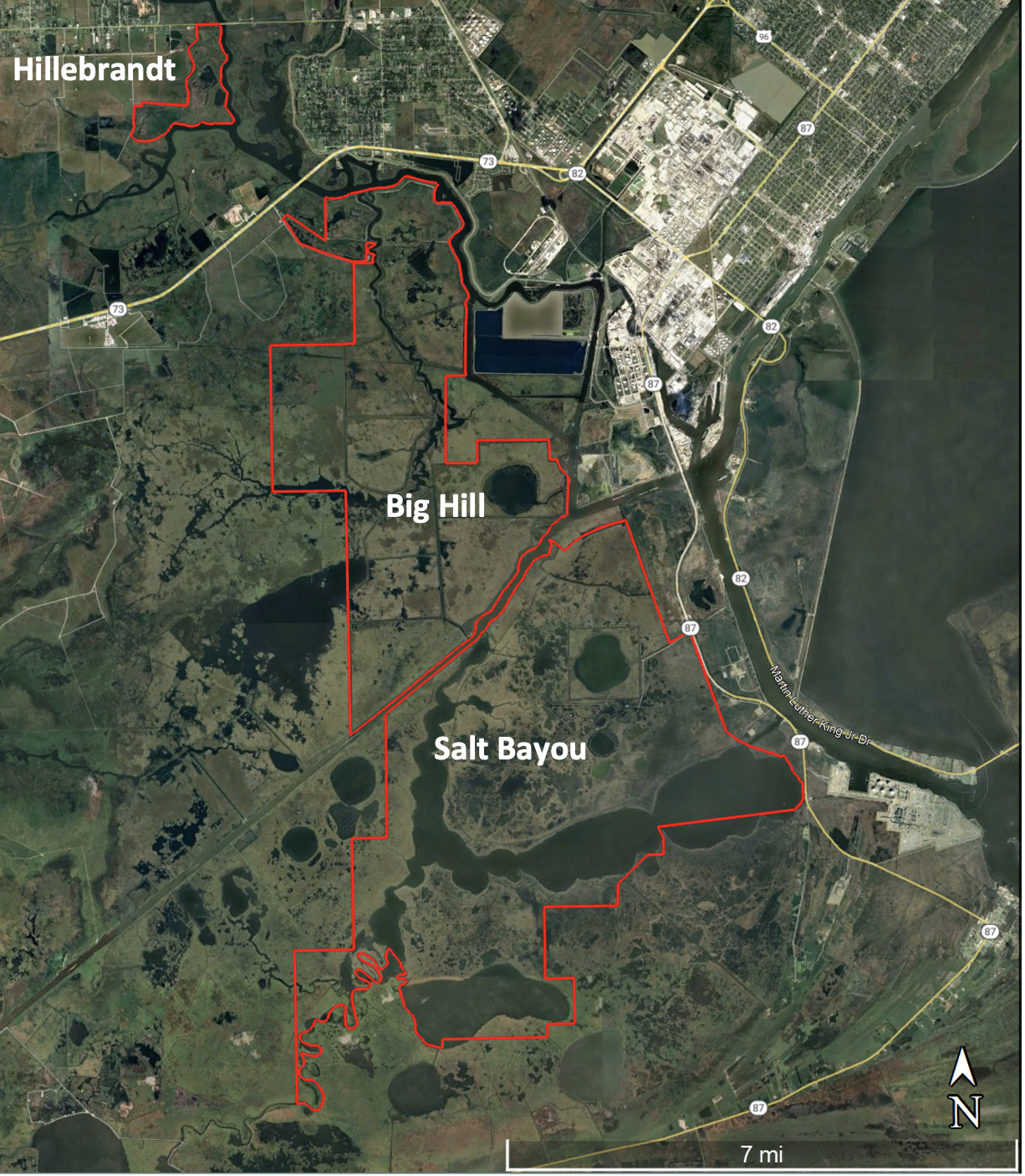
II. Discussion: The J.D. Murphree WMA consists of approximately 25,500 acres of coastal marsh and open water within the Texas Chenier Plain and is adjacent to the Sabine Neches Waterway. The WMA is divided into three units: Hillebrandt, Big Hill, and Salt Bayou.
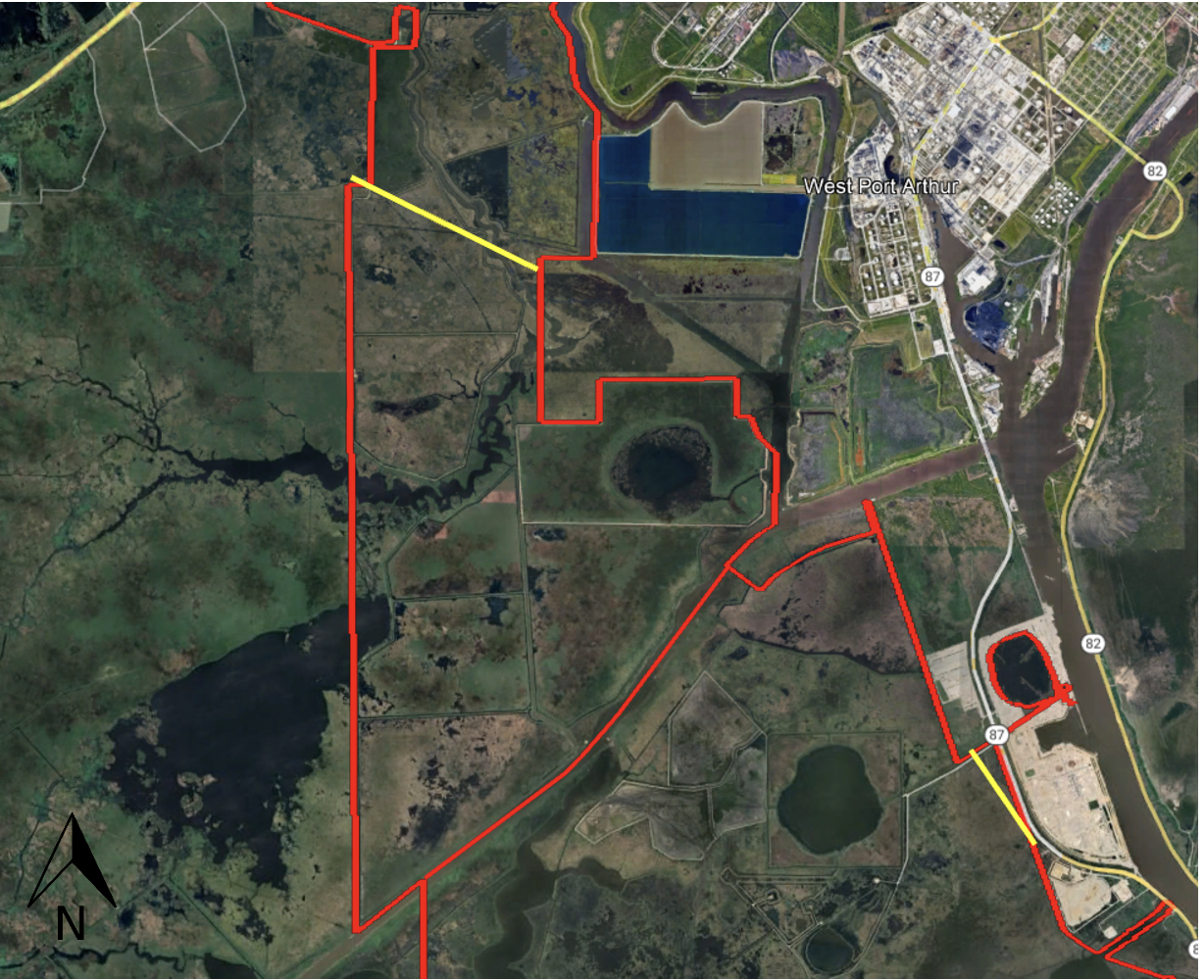
Mustang Express Pipeline, LLC requests an easement of 50 feet in width, crossing 11,352 feet (2.15 miles) of the WMA. The total easement area is approximately 13 acres. The proposed pipeline will use the horizontal directional drilling method.
Staff requests permission to begin the public notice and input process.
Attachments – 4
Work Session Agenda Item 21
Exhibit A
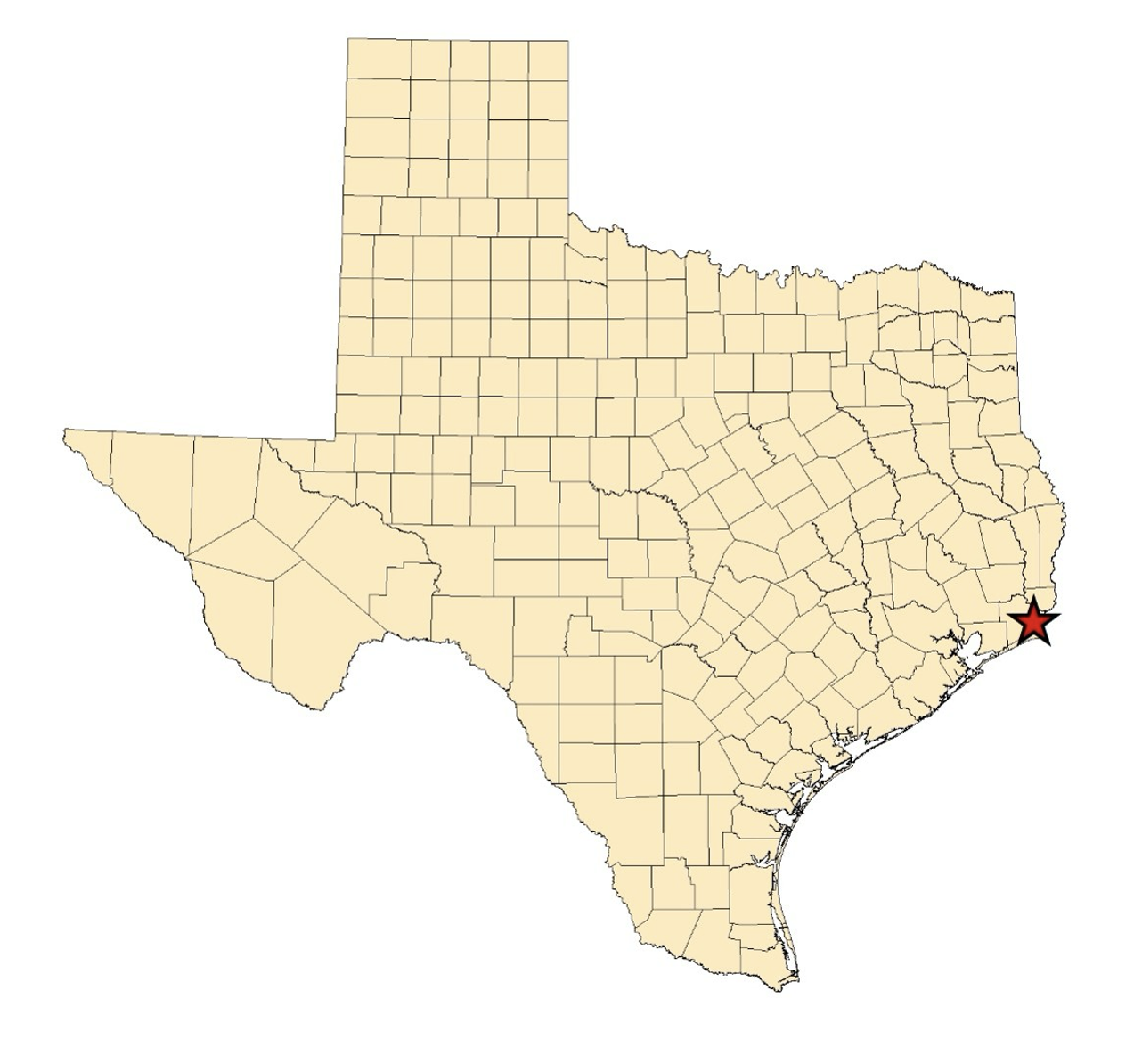
Location Map for the J.D. Murphree Wildlife Management Area (WMA)
Jefferson County
Work Session Agenda Item 21
Exhibit B
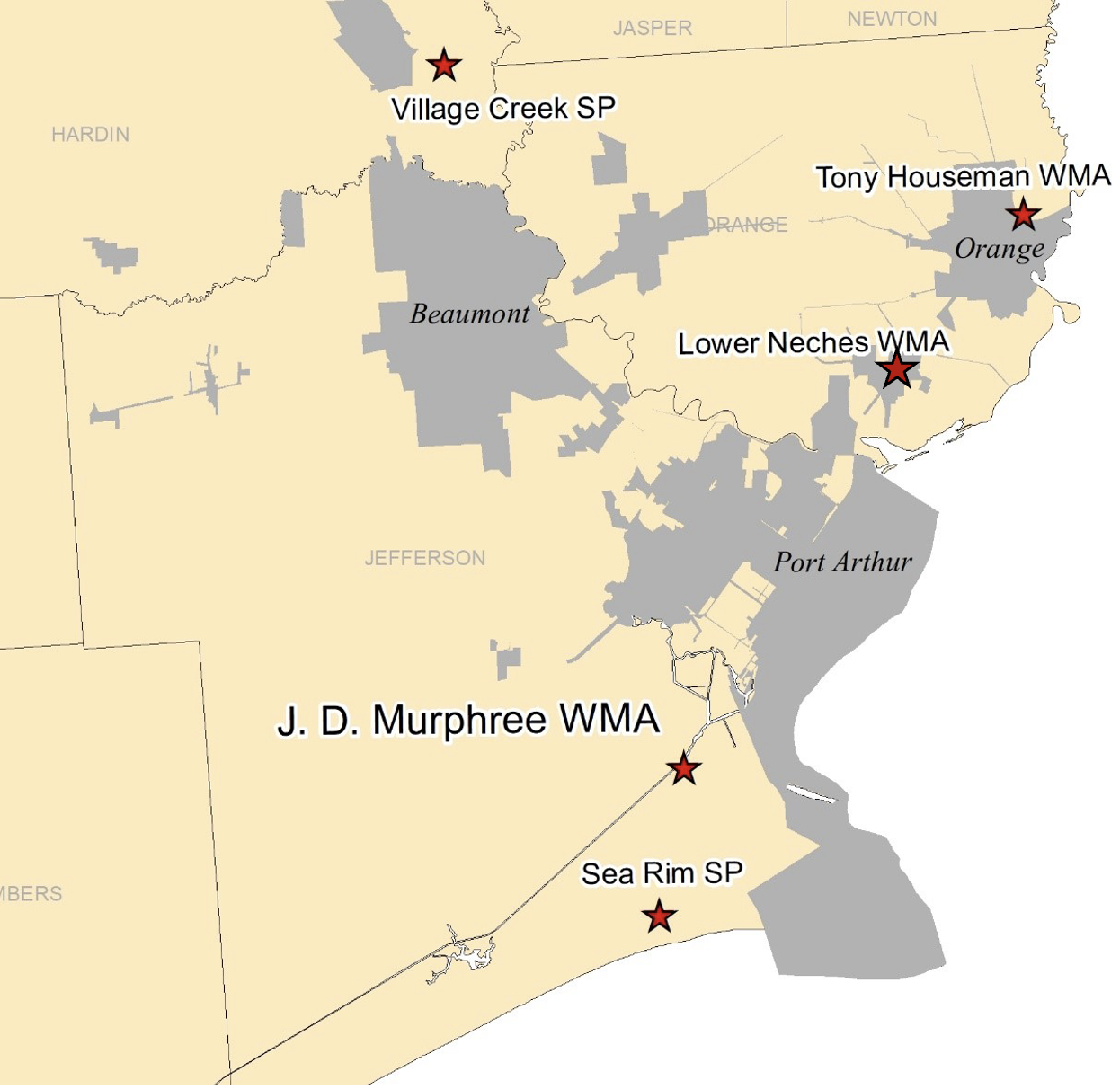
Vicinity Map for the J.D. Murphree WMA
Approximately 20 Miles South of Beaumont
Work Session Agenda Item 21
Exhibit C
Area Map of the J.D. Murphree WMA
Work Session Agenda Item 21
Exhibit D
Location of Requested Easement
WMA Outlined in Red
Requested Easement in Yellow
Work Session Agenda Item 22
Presenter: Trey Vick
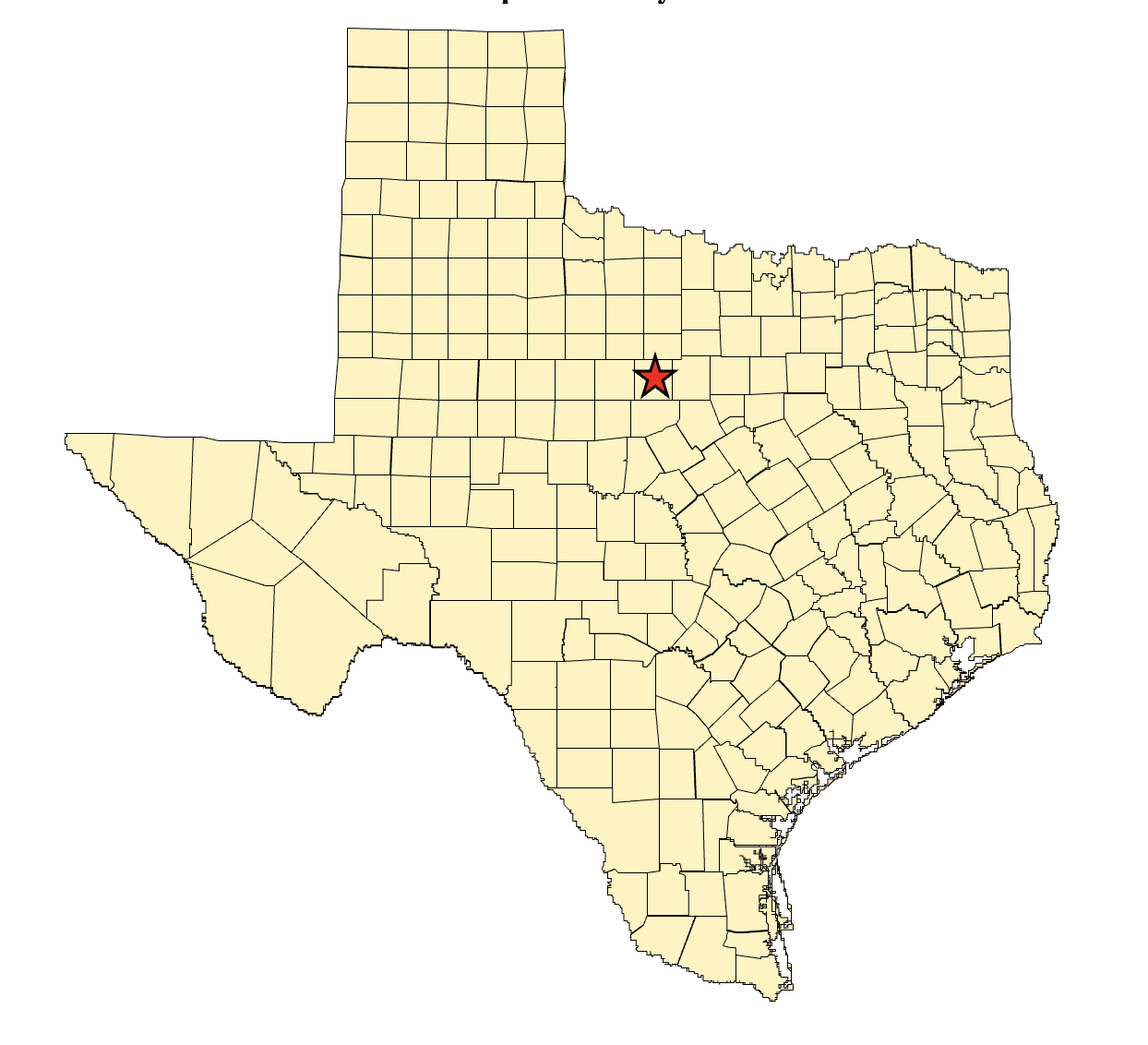
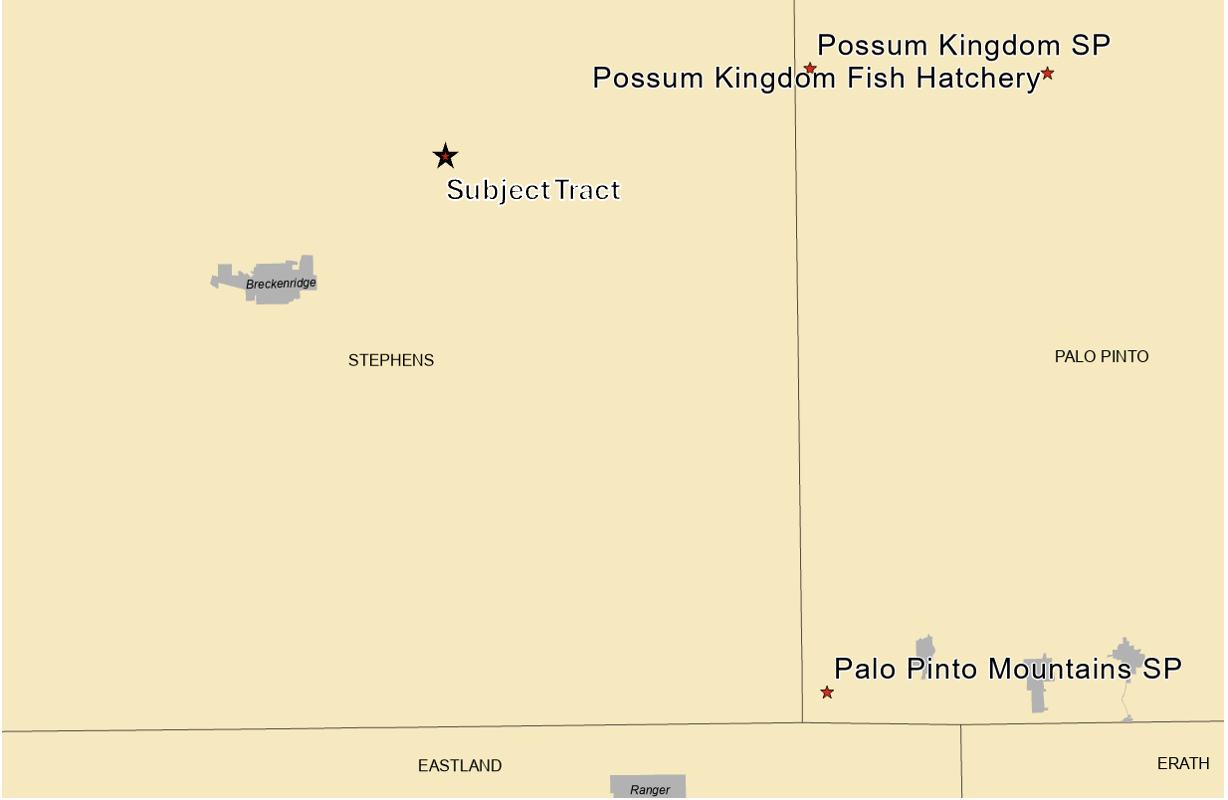
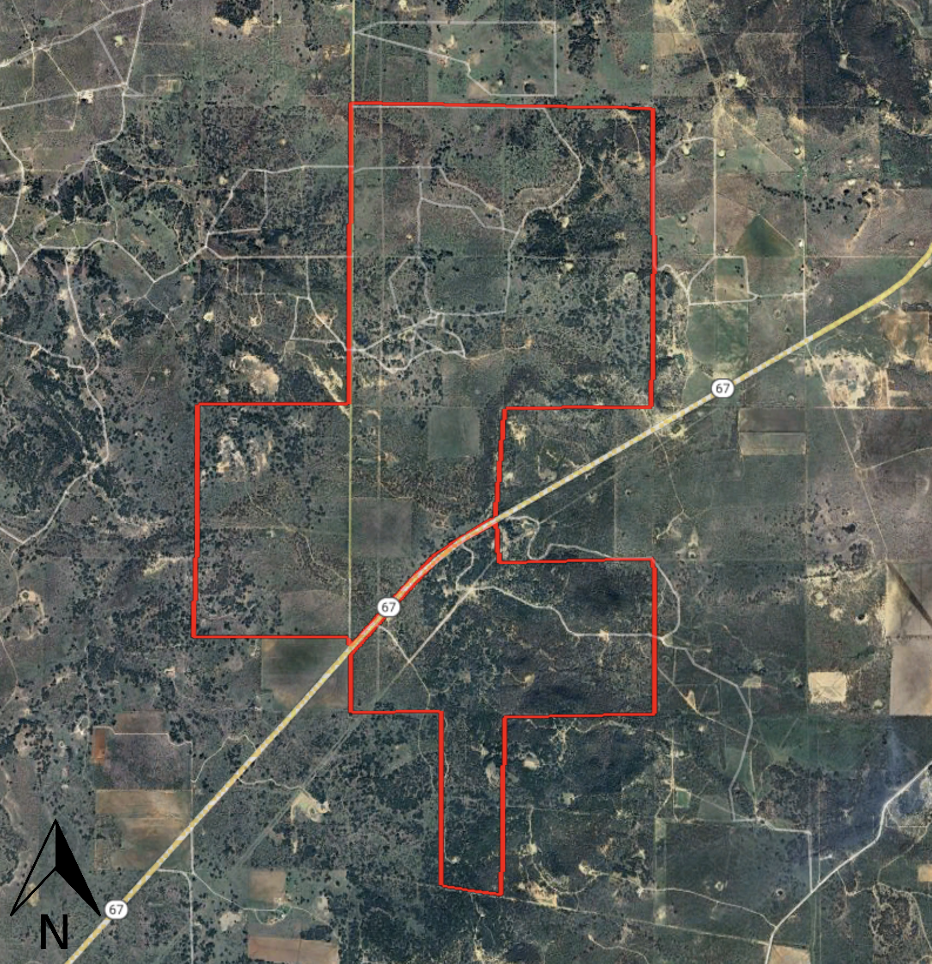
Land Acquisition – Stephens County – Approximately 2,850 Acres – Request Permission to Begin the Public Notice and Input Process
I. Executive Summary: Staff requests authorization to pursue the acquisition of an approximately 2,850-acre tract of land for a wildlife management area from a willing seller.
II. Discussion: The property proposed for acquisition consists of approximately 2,850 acres, including native wildlife habitat and flat to rolling hills, and will help expand the wildlife management area footprint in this region of Texas. Staff believes this property is suitable for a new wildlife management area, and acquisition will provide habitat protection and new recreational opportunities, like hunting.
Staff prioritizes acquiring inholdings and new wildlife management areas from willing sellers to improve recreational opportunities, conserve fish and wildlife habitat, and ensure the conservation of existing Texas Parks and Wildlife Department public lands. Acquisition of this tract will add a new wildlife management area to the department’s public land system and provide greater outdoor experiences and opportunities for the citizens of Texas.
Staff requests permission to begin the public notice and input process.
Attachments – 3
Work Session Agenda Item 22
Exhibit A
Location Map for Subject Tract
Stephens County
Work Session Agenda Item 22
Exhibit B
Vicinity Map for Subject Tract
Approximately 10 Miles Northeast of Breckenridge
Work Session Agenda Item 22
Exhibit C
Site Map of Proposed Acquisition
Subject Tract Outlined in Red
Work Session Agenda Item 23
Presenter: Trey Vick
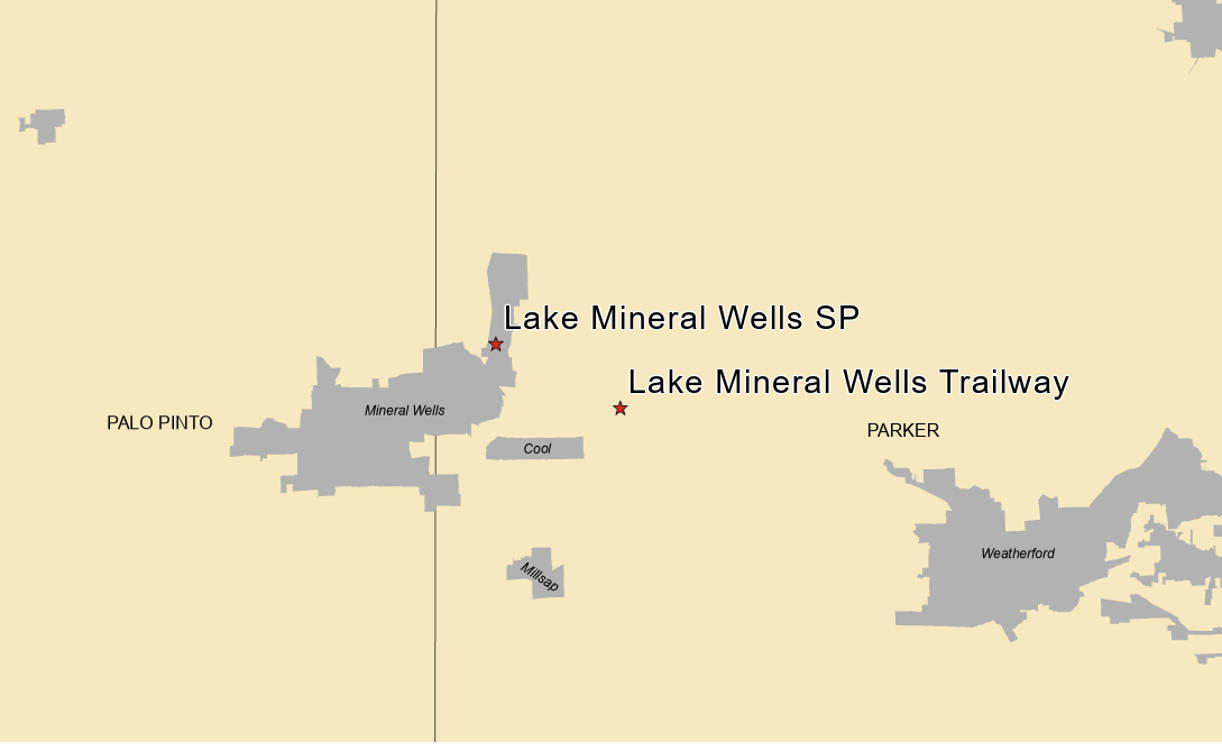
Land Acquisition – Parker County – Approximately 50 Acres at Lake Mineral Wells State Park and Trailway – Request Permission to Begin the Public Notice and Input Process
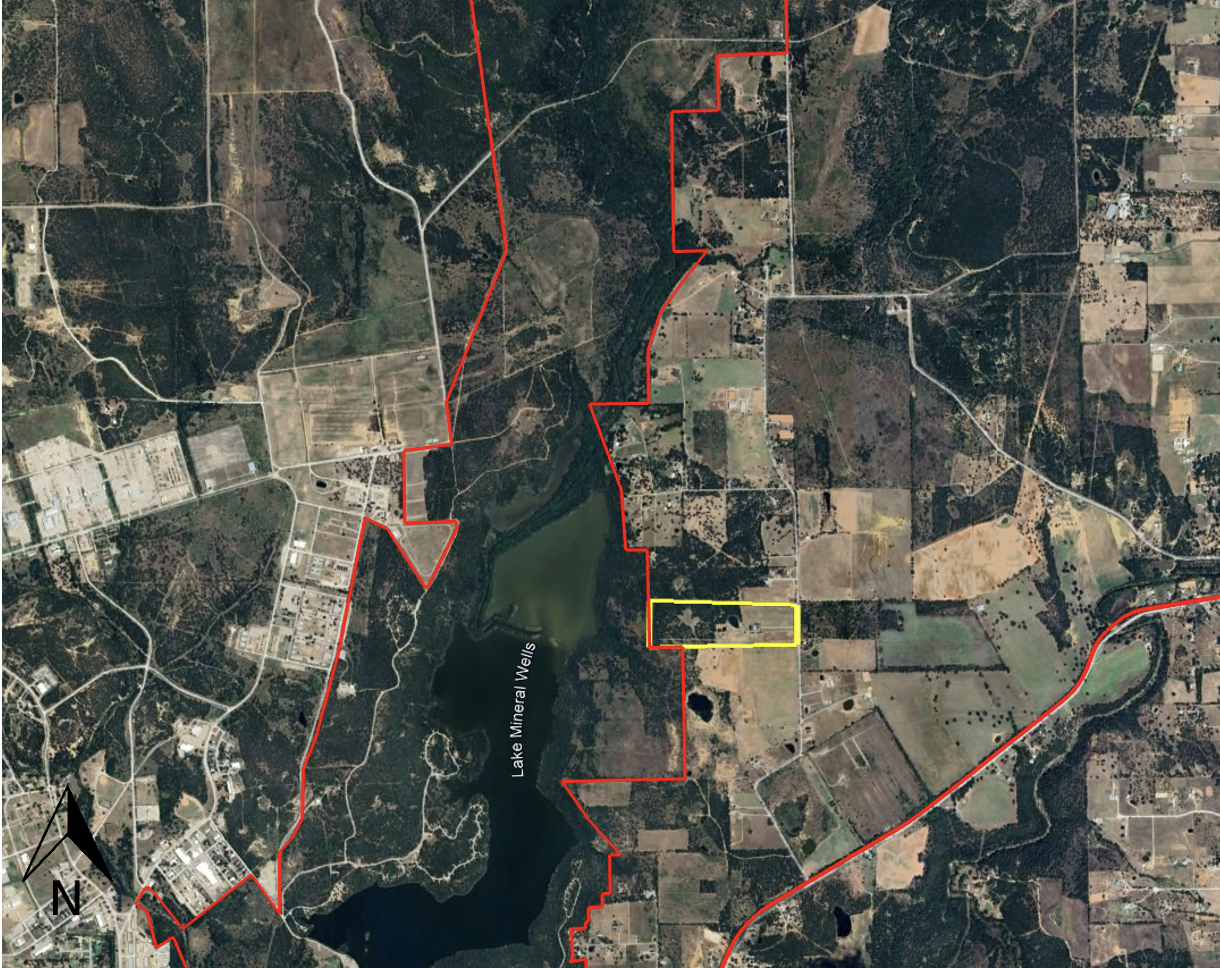
I. Executive Summary: Staff requests authorization to acquire a 50-acre parcel adjacent to Lake Mineral Wells State Park and Trailway. This tract is available for acquisition from a willing seller and would add operational utility to the park and provide greater access to portions of the park for recreational opportunities.
II. Discussion: Lake Mineral Wells State Park and Trailway consists of 3,280 acres located on Rock Creek, a large tributary of the Brazos River. The trailway stretches 20 miles from the town of Weatherford to the downtown district of Mineral Wells, in both Parker and Palo Pinto counties. In 1922, the City of Mineral Wells built Lake Mineral Wells to address the city’s increasing water needs. In 1963, the city found an alternative water supply and stopped using Lake Mineral Wells as its main source of water. In 1975, after the closing of Fort Wolters, the city and Fort Wolters donated the lake and surrounding acreage to Texas Parks and Wildlife Department (TPWD), with the city retaining responsibility for upkeep of the dam and spillway. The 3,280-acre state park opened on July 1, 1981.
Staff prioritizes acquiring state park inholdings and adjacent properties from willing sellers to minimize operational and management conflicts and ensure the conservation of TPWD public lands. Staff has identified a 50-acre tract adjacent to Lake Mineral Wells State Park and Trailway that is available for acquisition from a willing seller. The subject tract adds operational utility to the park, including for emergency response, and provides greater access to a 200-acre portion of the existing park that had limited and unreliable access. The additional access will provide greater recreational opportunities such as hiking and hunting.
Staff requests permission to begin the public notice and input process.
Attachments – 3
Work Session Agenda Item 23
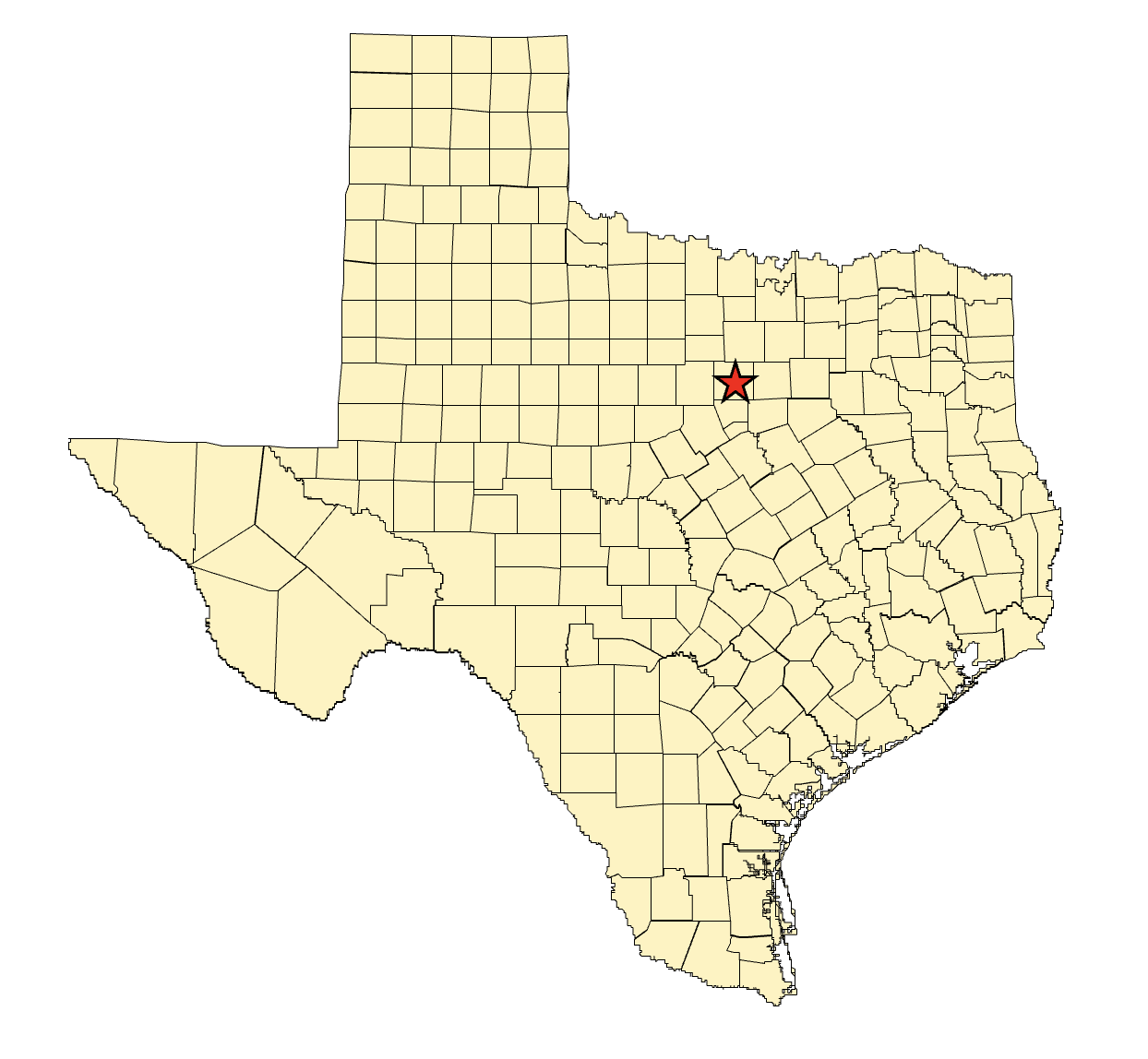
Exhibit A
Location Map for Lake Mineral Wells State Park and Trailway
Parker County
Work Session Agenda Item 23
Exhibit B
Vicinity Map for Lake Mineral Wells State Park and Trailway
Mineral Wells, Texas
Work Session Agenda Item 23
Exhibit C
Site Map of Proposed Acquisition
Lake Mineral Wells State Park and Trailway Outlined in Red
Subject Tract Outlined in Yellow
Work Session Agenda Item 24
Presenter: Rodney Franklin
Centennial Parks Conservation Fund Projects
I. Executive Summary: Staff will update the Texas Parks and Wildlife Commission on the acquisition of real property from willing sellers for Texas state parks using the Centennial Parks Conservation Fund and other funding sources.
Work Session Agenda Item 25
Presenter: James Murphy
Litigation Update
I. Executive Summary: Attorneys for the Texas Parks and Wildlife Department will update and advise the Texas Parks and Wildlife Commission regarding pending or anticipated litigation.