Inland Fisheries
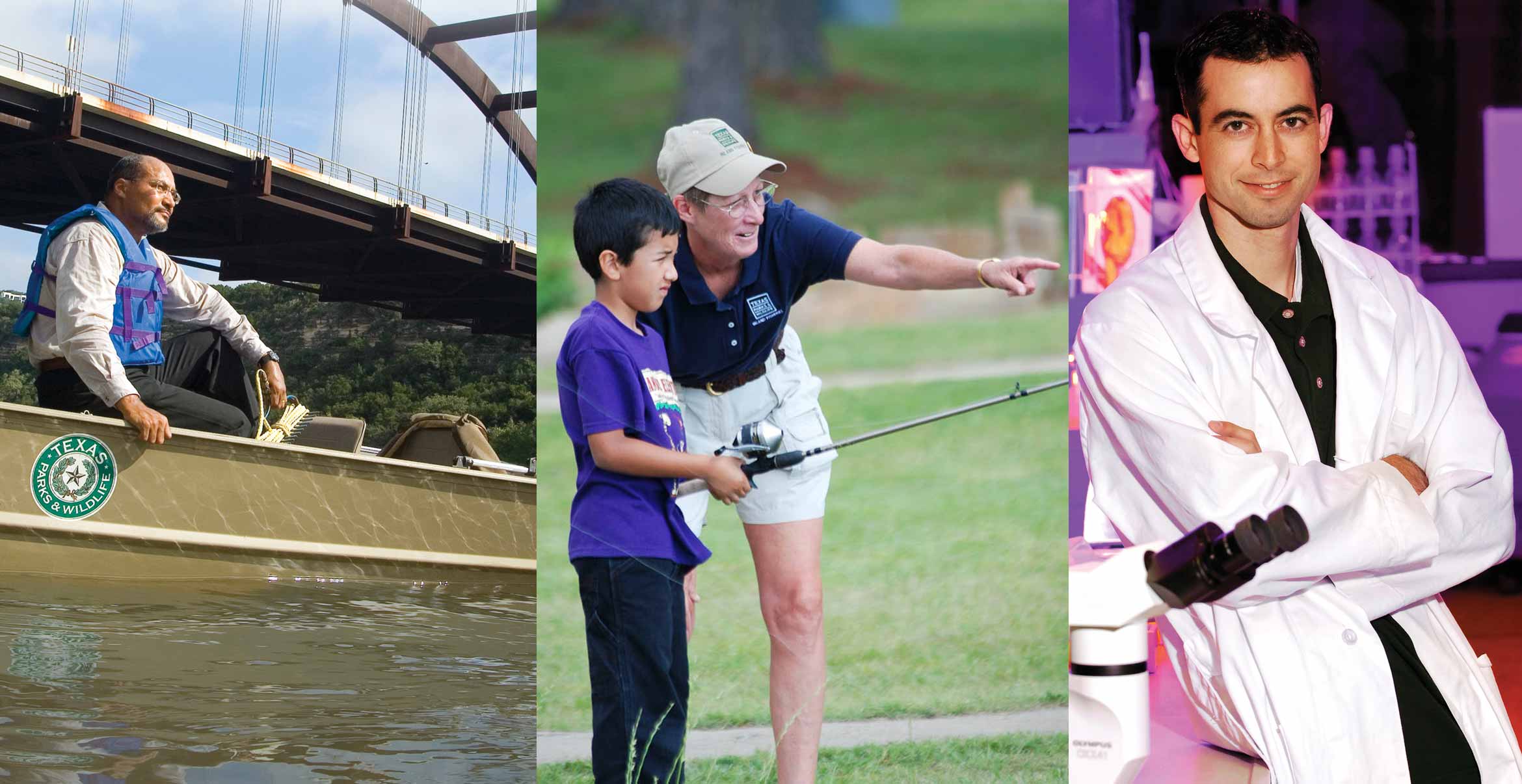
The Inland Fisheries Division provides quality fishing opportunities for 3.1 million freshwater anglers on Texas' 1,100 public lakes and 191,228 miles of streams, creeks, and rivers. Whether it's preserving Texas native species and freshwater biodiversity, promoting sportfishing, or serving up a wild-caught, healthy source of protein to feed Texas families, the Inland Fisheries Division plays essential roles in managing and conserving public freshwater fisheries resources to meet the needs of all Texans. The division exists to sustain thriving populations of fish and other aquatic species, and to sustain recreationally, commercially, and economically important fisheries.
Simply put, people need fish, and fish need the Inland Fisheries Division. Texas anglers spend an estimated $9.2 billion annually going fishing, generating an annual statewide economic impact of $14.2 billion and helping sustain over 80,000 jobs.
Division Activities
- Fisheries surveys and monitoring
- Fisheries research and scientific support
- Fish rearing and stocking
- Fish habitat restoration and enhancement
- Aquatic invasive species management
- Preservation of imperiled freshwater fishes, mussels, and crayfish
- Angler access improvements on rivers and lakes
- Regulatory permitting and consultations
- Fish kill investigation and recovery of damages
- Angler education and outreach
Career Opportunities
- Scientists
Field biologists, hatchery biologists, geneticists, ecologists, researchers. See specific roles. - Technicians
Fishery and habitat technicians, laboratory technicians, systems maintenance technicians, and boat and vehicle mechanics. See specific roles. - Data Analysts
Database managers, statisticians, trend analysts, Geographic Information Specialists - Education and Outreach Specialists
Tour guides, angler and wetland educators, event coordinators, exhibit curators - Support Staff
Budget managers, office managers, grant writers, customer service representatives
Work Environment
Teams are based at the TPWD headquarters in Austin, three regional offices, 14 district offices, five freshwater fish hatcheries, and the Texas River Center, Heart of the Hills Fisheries Science Center, Analytical Services Laboratory, and Texas Freshwater Fisheries Center. Fisheries biologists and technicians spend considerable time away from the office conducting surveys, stocking fish, restoring and enhancing fish habitat, enhancing angler access, connecting and engaging with local stakeholders, and performing other activities that benefit freshwater fisheries resources in Texas public waters. They typically work a 40-hour week, but the schedule isn't always 8 to 5. Sampling trips may involve longer hours. Some activities are conducted on nights and weekends.
Preparing for a Career in Inland Fisheries
Spend some time around water. Practice observing the world around you and consider what it would be like to work in such an environment. Take high-school courses in biology, chemistry, physics, mathematics, computer science, English and communications. Visit a nearby college or university that offers courses in fisheries or aquatic biology. Talk with professors and students in those programs to learn about educational needs and programs that might suit you best.
Fisheries Biologists and Technicians
Find out about specific roles, education, and experience for Fisheries Biologists and Technicians.
Why We Love It Here
- Spend time outdoors exploring the natural diversity of Texas
- Work with living things in natural settings
- Maintain healthy fisheries for present and future generations
- Work with internationally renowned experts in the field of freshwater fisheries management, research and conservation
- Steward aquatic organisms and habitats in 1,100 public reservoirs and 191,000 miles of rivers and streams