
Nature
Old Tunnel is home to up to 3 million Mexican free-tailed bats (Tadarida brasilienses mexicana) and 3,000 cave myotis bats (Myotis velifer) from May through October.
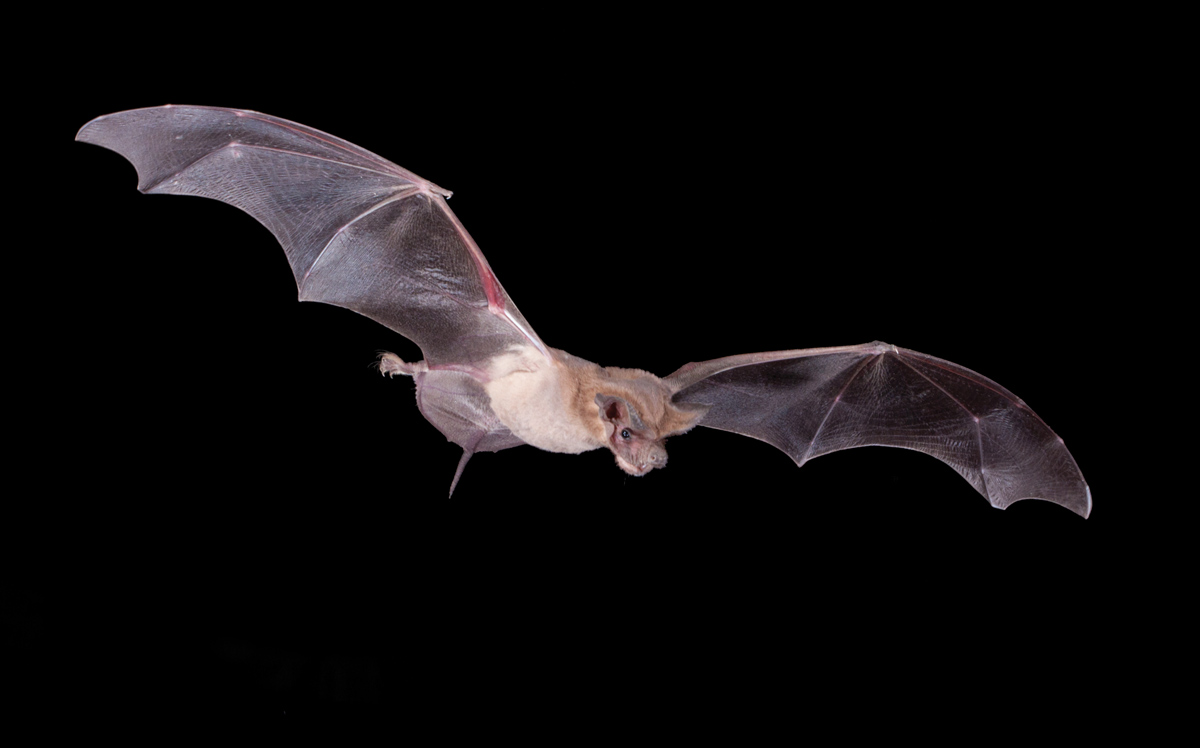
During these months, millions of Mexican free-tailed bats spend their days in the tunnel and their nights on the wing. The tunnel provides them with a secure roosting place and protection from predators while they rest.
This is a pseudo-maternal colony. In the spring, around one million female Mexican free-tailed bats migrate to Old Tunnel. They leave to have their babies elsewhere sometime in July. Roughly the same number of male bats migrate in to the tunnel around that time.
In August, the females return with their babies and the population of the tunnel balloons to about three million bats.
The evening bat flight is at its most astounding then. Millions of bats spiral out of the tunnel each evening, gaining speed and altitude before spreading out to hunt insects overnight.
Emergence times vary based several factors - not just sunset. If you plan to visit, check our Facebook page for the latest emergence times.
Bats leave for warmer climates when the weather cools down, around the beginning of November. The tunnel is mostly empty until spring when the cycle begins again.
Old Tunnel is also home to a variety of wildlife, such as ringtail cats, foxes, deer, raccoons, snakes and all kinds of birds during migration seasons.
Learn more:
